When fishing for halibut, understanding how the length of your catch translates to its weight is crucial. The Halibut Length To Weight Chart provides valuable insights that can enhance your fishing experience. Whether you’re a parent teaching your kids about fishing or an enthusiast looking to improve your skills, having this chart on hand can help in estimating the size of your catch accurately.
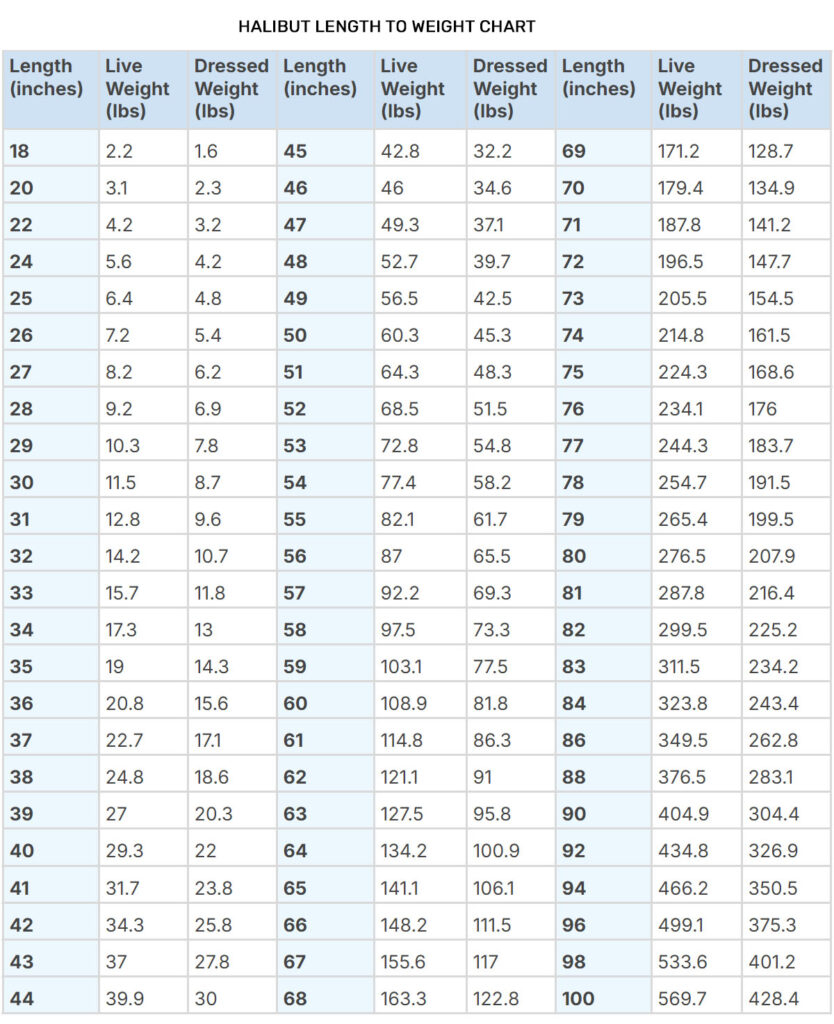
Understanding the Halibut Length To Weight Chart
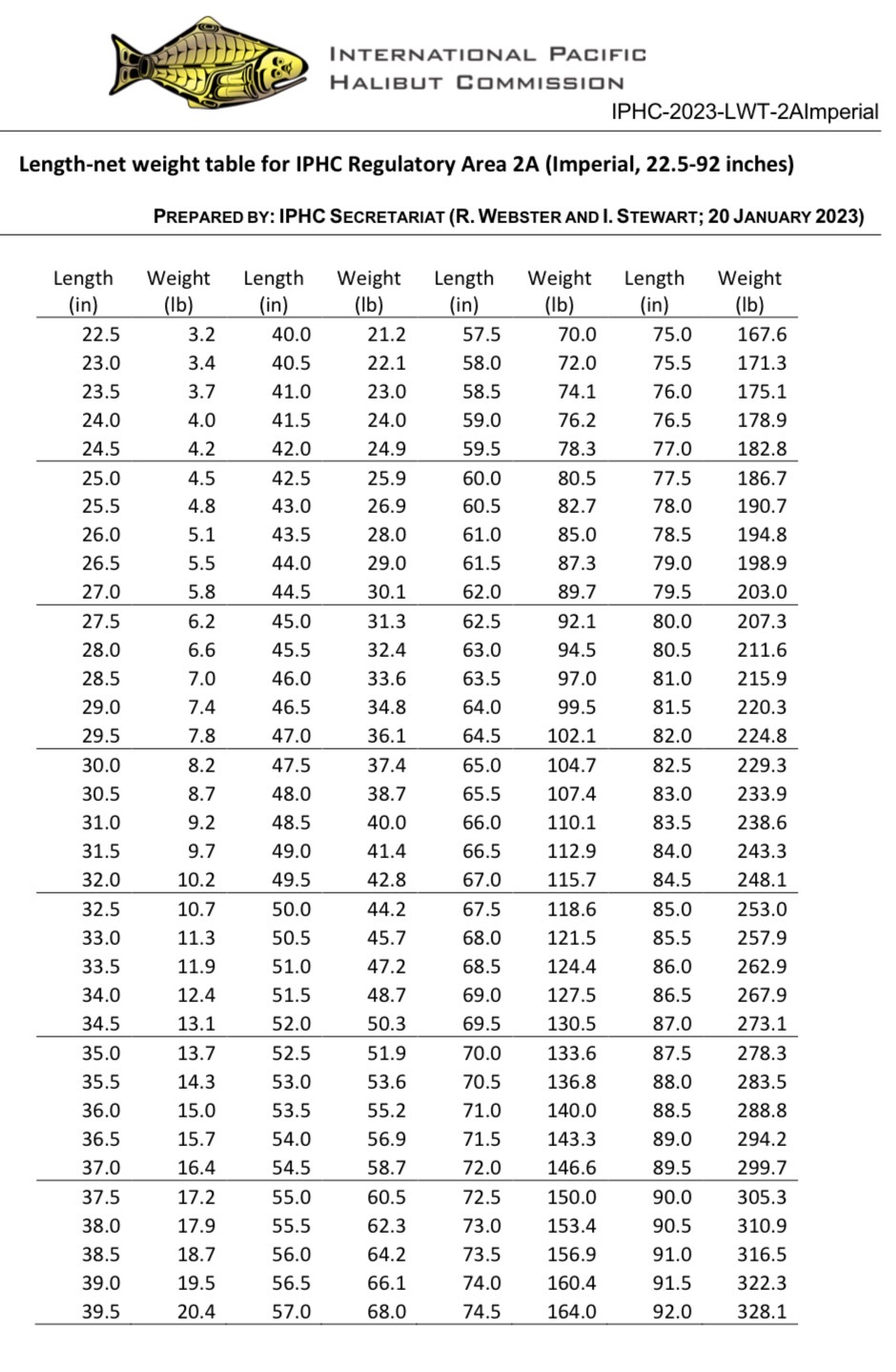
The Halibut Length To Weight Chart is a practical resource that outlines the average weight of halibut based on their lengths. This chart is particularly useful for anglers who want to keep track of their catches or those who are simply interested in the sizes of halibut they might encounter. Typically, halibut can range significantly in size, with some weighing over 400 pounds. A basic understanding of how length correlates to weight can help you determine If you are dealing with a small specimen or a trophy fish.
For example, if you catch a halibut measuring 30 inches, you can refer to the chart to find that it might weigh around 10-15 pounds. This kind of knowledge can be especially helpful during fishing trips when you want to ensure you’re adhering to local regulations regarding size limits.
How to Use the Chart Effectively
Using the Halibut Length To Weight Chart effectively involves a few simple steps. First, print out the chart and keep it handy while fishing. This way, you can quickly gauge the weight of your halibut without needing to rely solely on your memory or estimates.
Here are some practical tips for using the chart:
- Print in a Waterproof Format: If you’re fishing outdoors, consider printing the chart on waterproof paper or laminating it. This will help protect it from the elements.
- Keep it Accessible: Store the chart in a tackle box or hang it on your boat for easy access. The less you have to search for it, the more time you can spend fishing.
- Pair with a Measuring Tape: Having a measuring tape handy allows you to accurately measure the length of your catch, ensuring you use the chart effectively.
Age Appropriateness and Educational Use
While the Halibut Length To Weight Chart is primarily a fishing resource, it can also serve educational purposes. For parents, this chart can be an excellent teaching tool for children aged 8 and up. It introduces them to concepts of measurement, estimation, and even basic biology regarding fish sizes and weights.
You can incorporate this chart into a lesson plan by:
- Measuring Real Fish: If possible, take your child fishing and use the chart to measure and weigh various catches. This real-world application can make learning more engaging.
- Discussing Ecosystems: Use the chart as a starting point to talk about the role of halibut in marine ecosystems, discussing their size, habitat, and why size regulations are important for conservation.
- Calculating Weights: Encourage kids to calculate the estimated weight of fish based on their lengths before checking against the chart, fostering critical thinking skills.
Where to Find the Chart
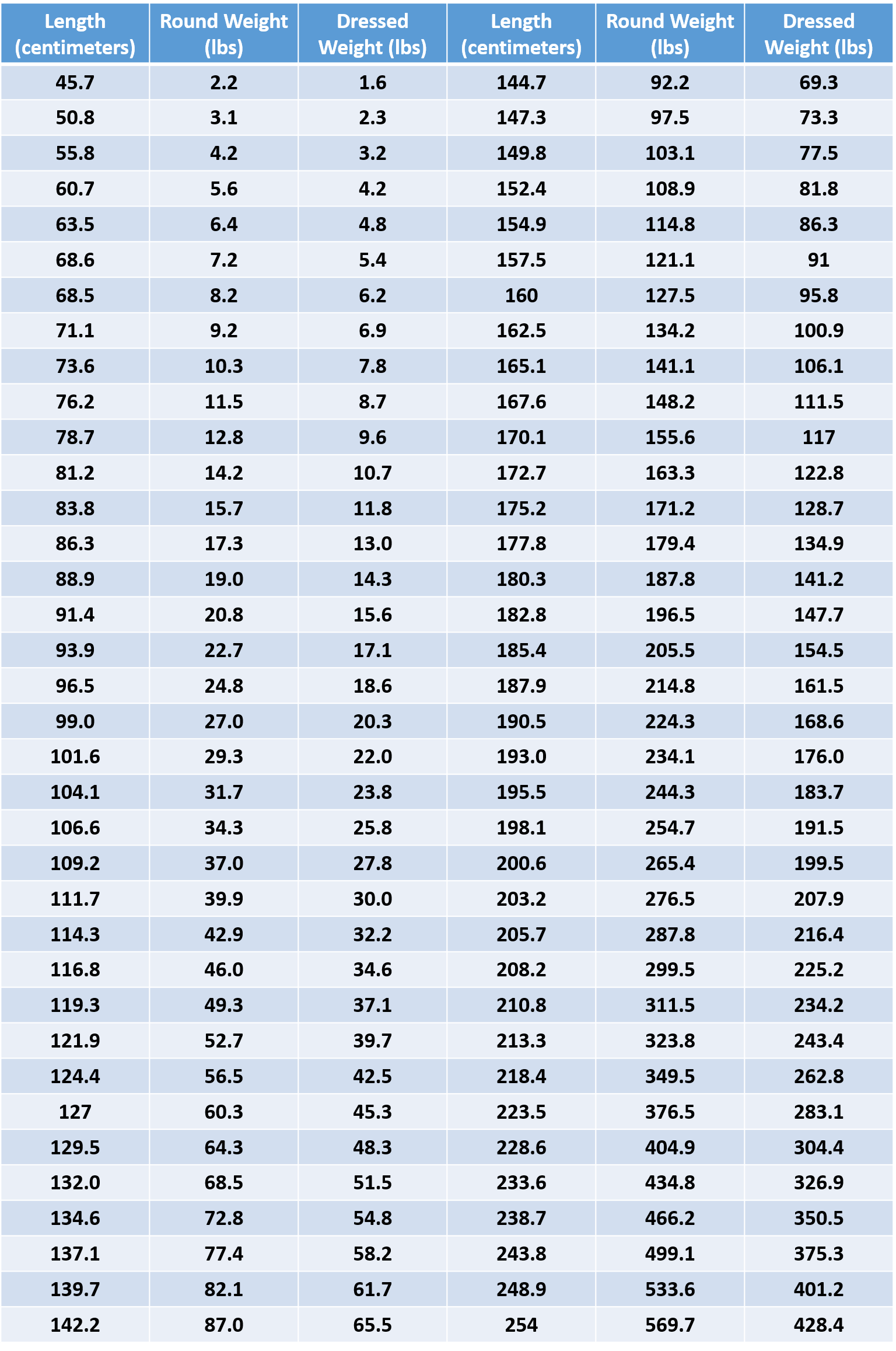
The Halibut Length To Weight Chart can be found on various fishing websites and forums dedicated to angling. Additionally, many local fishing shops or community centers may have printed versions available. If you prefer a digital format, look for downloadable PDFs that you can print at home.
Make sure to choose a chart that is up-to-date, as weight estimations can vary based on location and species. The most reliable charts are often produced by local fish and game departments or reputable fishing organizations.
