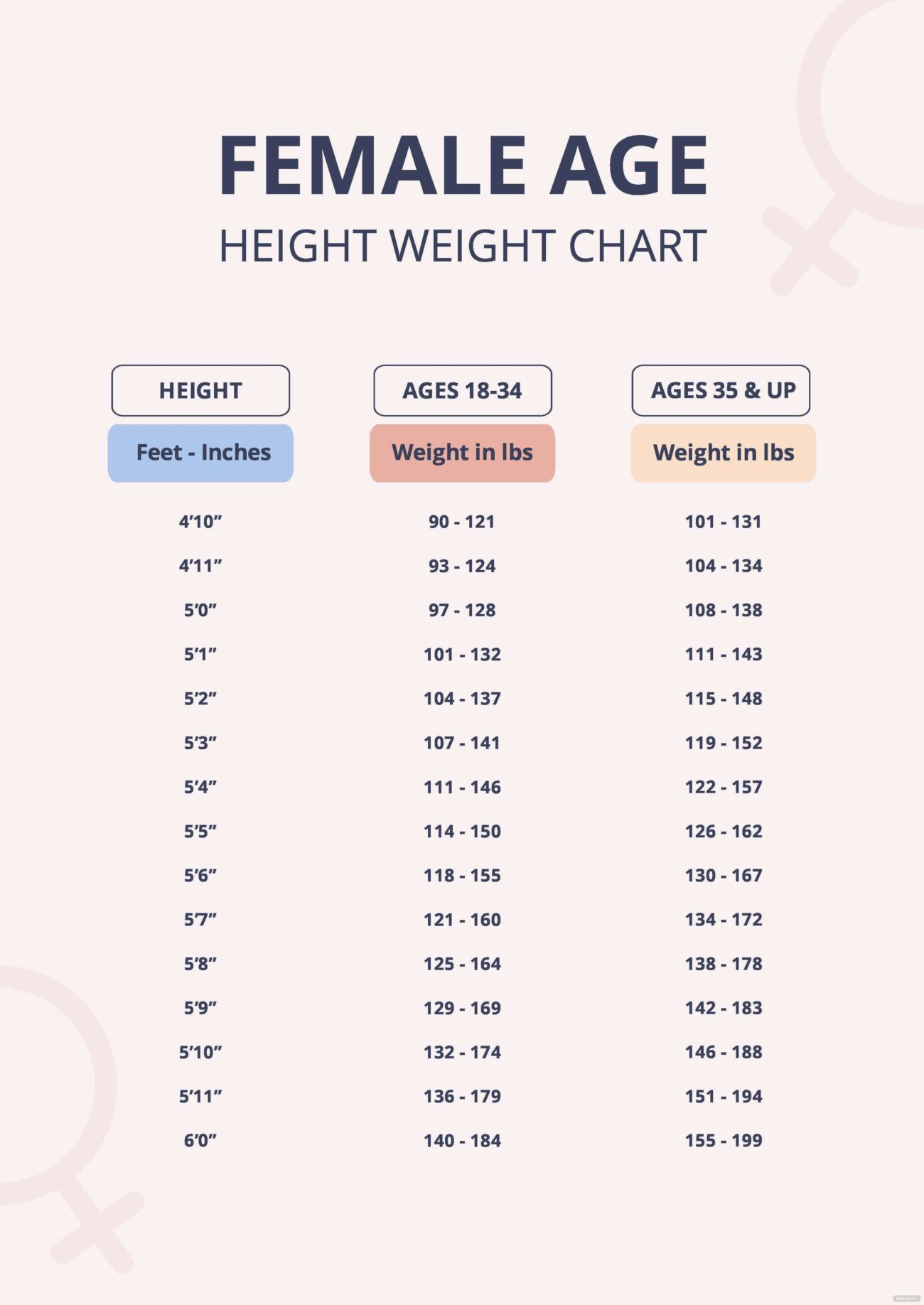
Using a printable resource like a female weight chart can be incredibly useful for tracking health and fitness goals. A well-structured chart provides insight into weight ranges based on age and height, helping you assess your progress over time. The Female Weight Chart By Age And Height is designed to help you understand where you stand, making it easier to set realistic health targets.
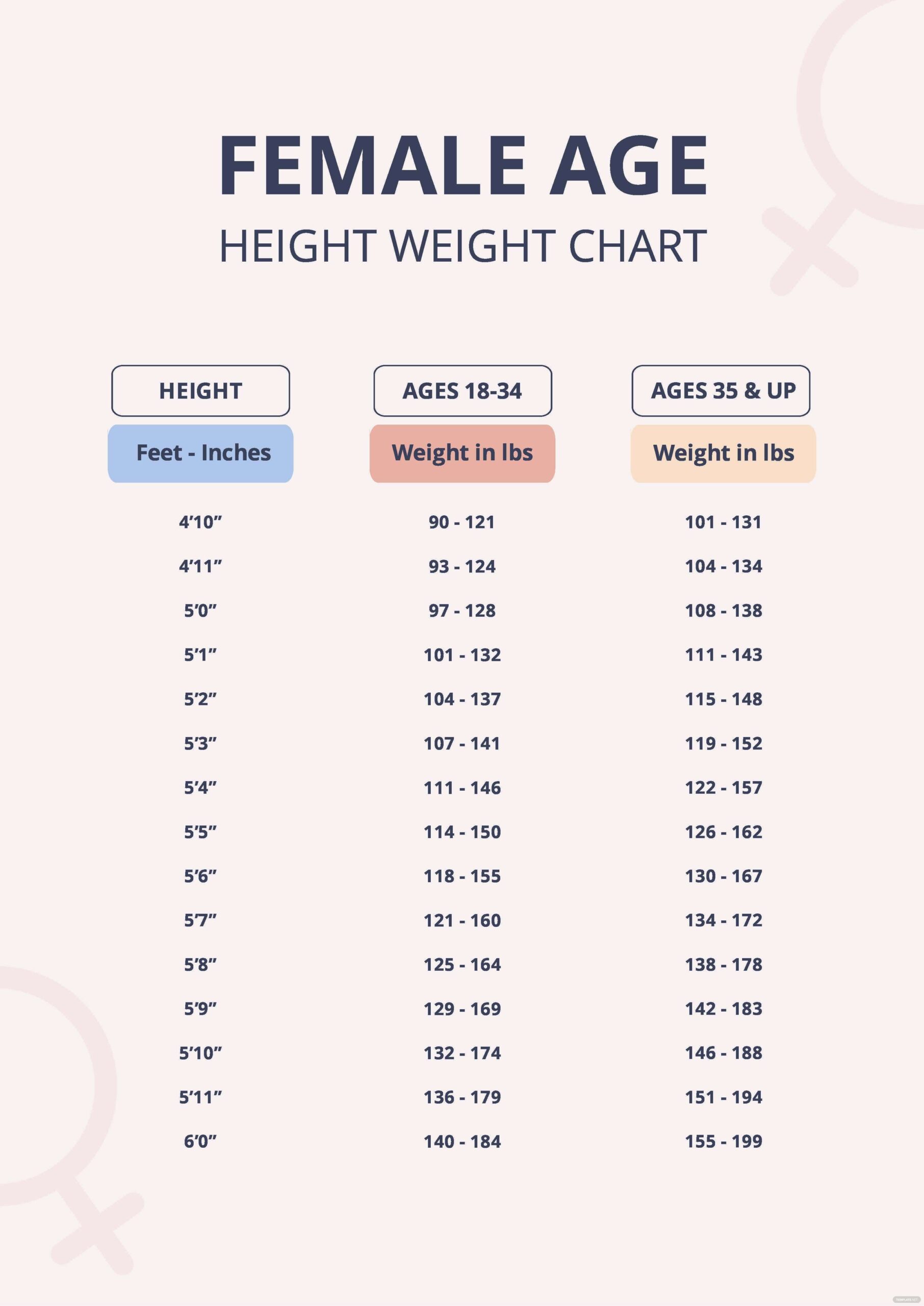
Understanding the Layout of the Weight Chart
The layout of the female weight chart is straightforward, typically formatted as a table with age ranges listed vertically on one side and height categories horizontally across the top. This arrangement allows for quick reference, making it easy to find the appropriate weight range based on your specific age and height.
To use the chart effectively, you’ll want to have your measurements ready. Here’s how to approach it:
- Gather Your Measurements: Measure your height accurately, preferably without shoes. This is essential because the chart is based on height.
- Identify Your Age Range: The chart will likely break down age ranges into groups, such as 18-24, 25-34, 35-44, and so on. Knowing your age will help you find the correct row quickly.
- Locate Your Height: Find the column that corresponds to your height. The intersections of your age range and height will show the recommended weight range for you.
This layout supports readers in tracking their weight against a standard that accounts for age and height, promoting a more personalized approach to health.
Key Sections of the Female Weight Chart
When using the Female Weight Chart By Age And Height, you’ll notice several important sections that guide your understanding:
Age Ranges
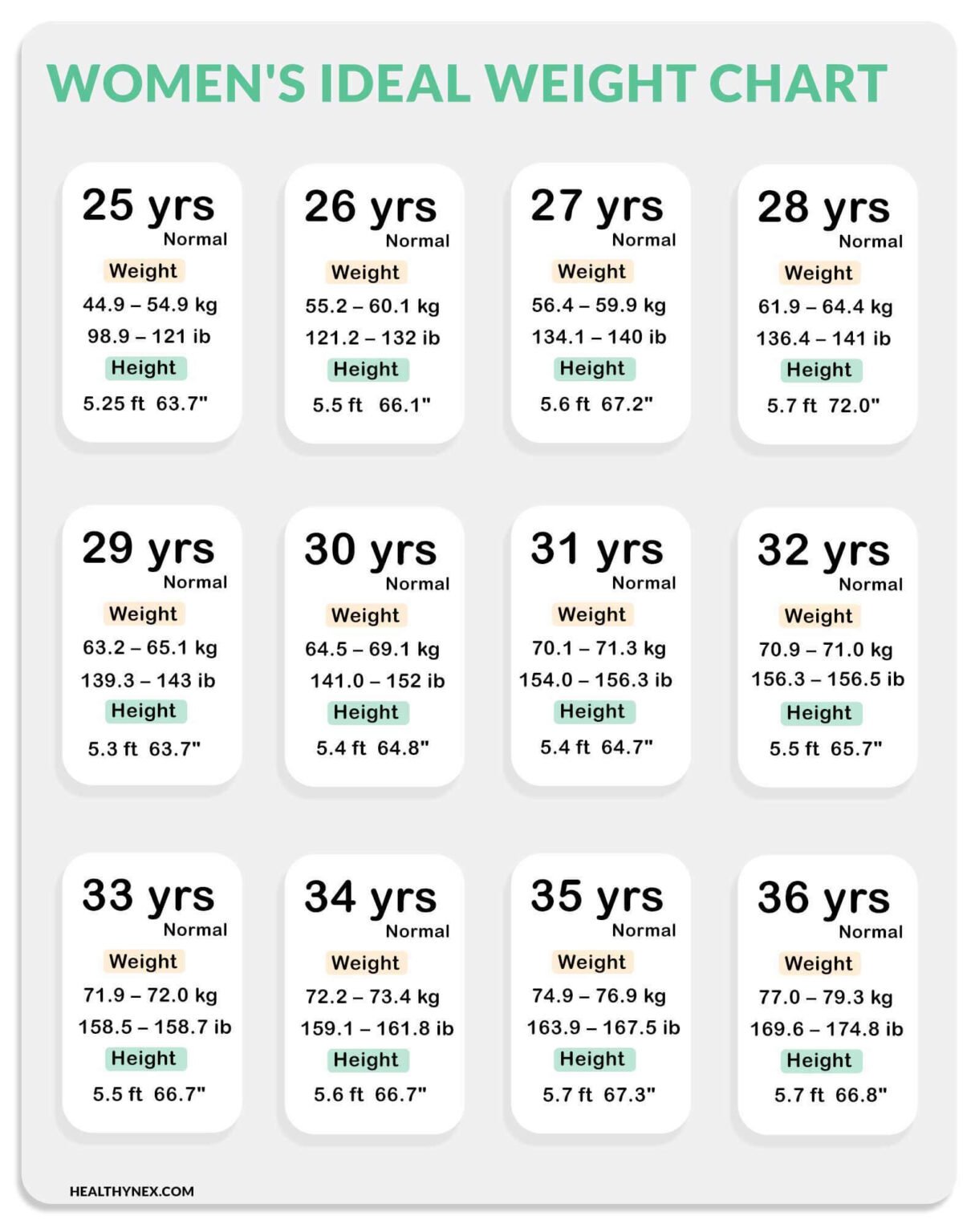
The chart usually categorizes age into distinct groups. This is significant because weight expectations can change as people age due to factors like metabolism and lifestyle changes. Here’s what you can typically find:
- 18-24 years: Generally, this group may have a higher metabolic rate, allowing for a broader range of healthy weights.
- 25-34 years: As young adults begin settling into their careers, lifestyle changes can influence weight.
- 35-44 years: This age group may start to see more pronounced impacts from lifestyle choices, so tracking becomes more crucial.
- 45-54 years: Weight management is essential as metabolism naturally slows down.
- 55 years and older: Health concerns often arise, making it even more important to track weight and health metrics.
Height Categories
Height categories in the chart help you identify where you fit within the recommended weight ranges. Common height increments might include:
- 4’10” to 5’0”
- 5’1” to 5’3”
- 5’4” to 5’6”
- 5’7” to 5’9”
- 5’10” and above
Each category will contain specific weight ranges that align with the corresponding age group. This segmentation allows for an individualized approach to health, recognizing that weight standards can differ based on height.
Using the Chart to Track Progress
One of the best features of the weight chart is its ability to help you track progress over time. After you’ve filled in your current weight, you can set goals based on the recommended ranges. Here’s how to make the most of it:
- Regular Updates: Make it a habit to check your weight regularly, ideally weekly or bi-weekly. This frequency allows you to see trends rather than fluctuations caused by daily changes.
- Set Realistic Goals: Based on your current weight and the chart’s recommendations, set achievable goals. If you’re above the recommended range, aim for gradual weight loss rather than drastic changes.
- Monitor Your Health: Consider other health factors as well. A weight chart is a useful tool, but it should be one part of a larger health strategy that includes diet, exercise, and medical check-ups.
- Visualize Your Progress: You could create a simple chart or graph where you plot your weight over time. This visual representation can motivate you to stay on track.
- Adjust as Needed: If you notice that you consistently fall outside the recommended ranges, it may be time to reevaluate your lifestyle choices or consult with a healthcare professional.
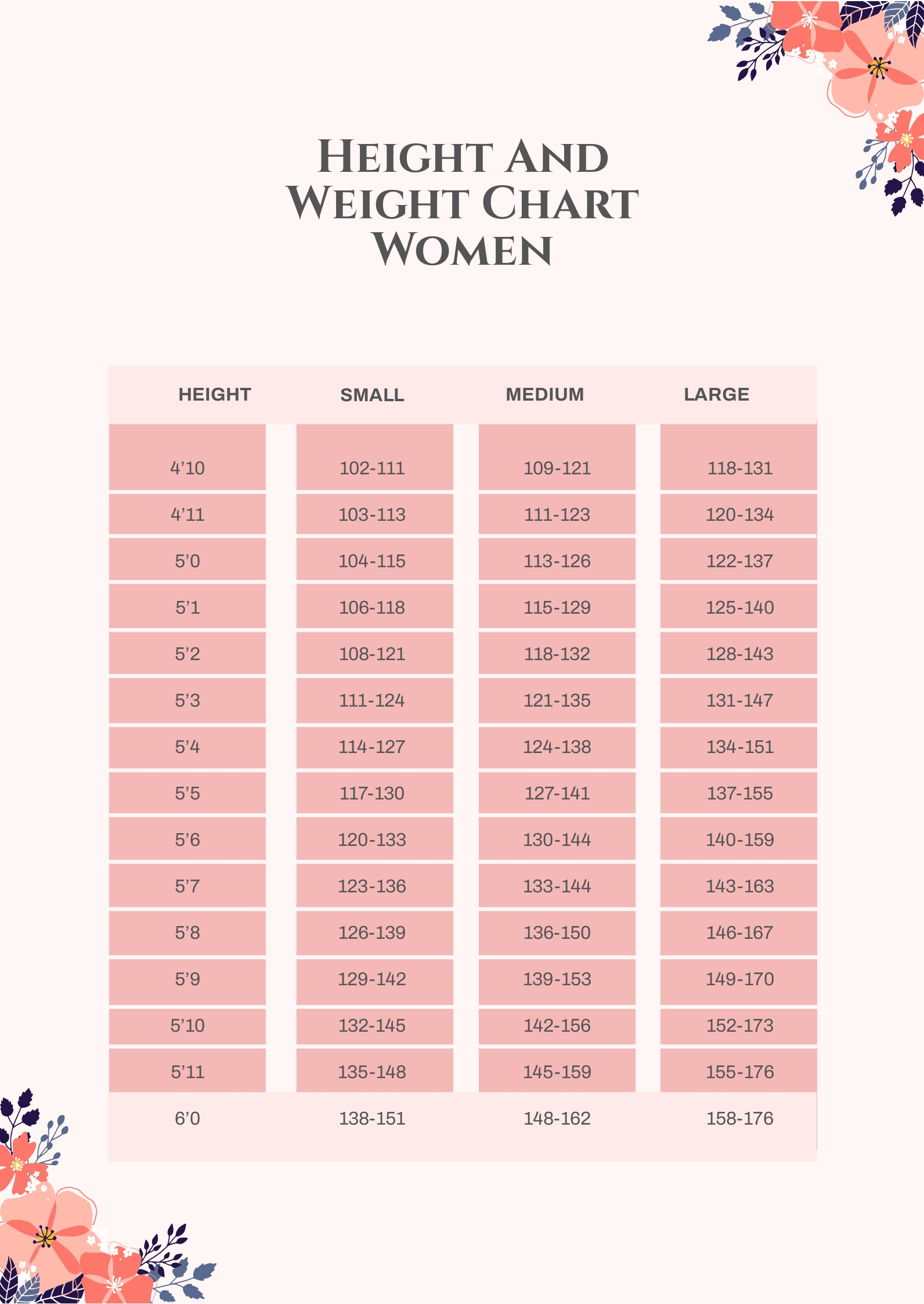
Downloading and Printing the Female Weight Chart
Many printable resources, including the Female Weight Chart By Age And Height, are available in PDF format. This allows for easy downloading and printing. When preparing to print, consider these tips:
- Paper Size: Standard letter size (8.5” x 11”) works best for most home printers. If you have a larger printer, you might consider A3 for a more detailed chart.
- Print Settings: Ensure that you select the “Fit to Page” option to avoid any cut-off sections. This setting will help maintain the integrity of the chart layout.
- Material: If you plan to use the chart frequently, consider printing it on cardstock or laminating it for durability. This way, you can use dry-erase markers to track your weight directly on the chart.
The convenience of having a physical copy means you can keep it in a visible place, such as on your fridge or in your planner, constantly reminding you of your health goals.
By using the Female Weight Chart By Age And Height effectively, you can take significant steps toward managing your health and tracking your progress in a structured way. If you are trying to maintain your current weight or work towards a healthier goal, this chart can serve as a valuable resource.
