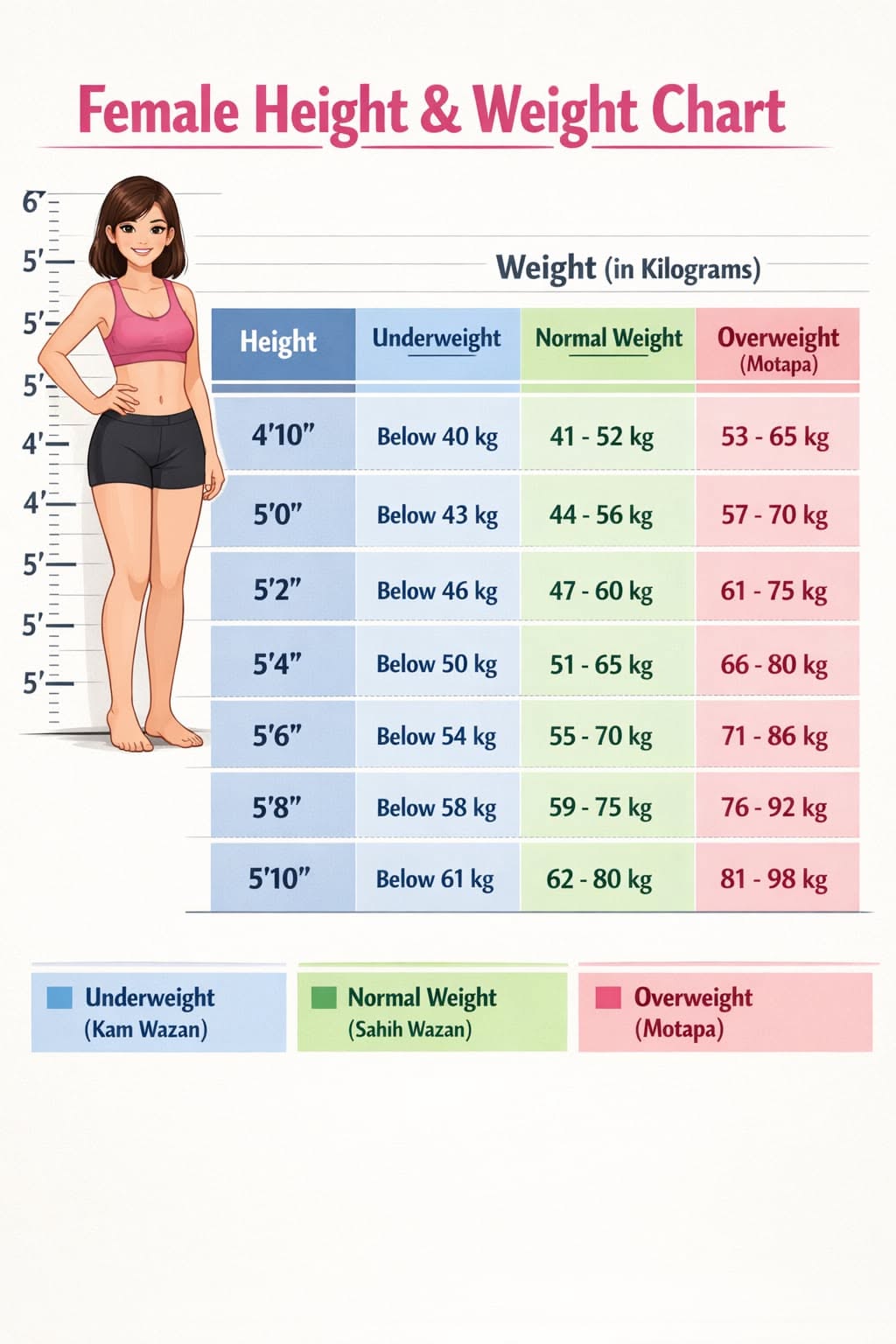
Understanding your child’s growth and development is essential as a parent. A Female Height And Weight Chart can be a valuable tool for tracking growth patterns, ensuring your child is developing healthily. This chart allows you to compare your child’s height and weight against standard growth metrics, helping you make informed decisions about their health and nutrition.
What is a Female Height And Weight Chart?
A Female Height And Weight Chart is a graphical representation that shows the average height and weight of girls at different ages. These charts are typically based on data collected from various health organizations and can help parents and guardians understand how their child’s growth compares to national averages. The chart usually includes percentiles, which indicate how your child’s measurements compare to those of their peers.
For example, if your daughter is in the 75th percentile for height, it means she is taller than 75% of girls her age. Understanding this information can help you identify if your child is growing at a healthy rate and if any adjustments in diet or activity level might be necessary.
How to Read the Chart
Reading a Female Height And Weight Chart may seem daunting at first, but it’s relatively straightforward once you know what to look for. Generally, the chart will have age groups on one axis (usually the x-axis) and height and weight on the other (the y-axis).
- Locate your child’s age: Start by finding your child’s age on the horizontal axis.
- Find height and weight: Move vertically to find the corresponding height and weight.
- Check percentiles: Look at the lines on the chart. If your child’s measurements fall between the 5th and 85th percentiles, they are generally considered to be within a healthy range.
If your child’s measurements are consistently below the 5th percentile or above the 85th percentile, it may be worth consulting with a healthcare professional for further evaluation.
When to Use the Chart
A Female Height And Weight Chart can be beneficial during various stages of your child’s life. Here are a few instances when it’s particularly useful:
- Routine Checkups: During pediatric visits, doctors often use growth charts to track progress. Keeping a chart at home can help you stay informed between visits.
- Monitoring Growth Spurts: Children often experience growth spurts, especially during puberty. The chart helps you visualize these changes.
- Dietary Adjustments: If you notice your child is falling behind in growth percentiles, this could indicate a need for dietary changes or increased physical activity.
Digital Vs. Printable Charts
You have options when it comes to using a Female Height And Weight Chart: digital versions or printable ones. Each format has its benefits, depending on how you plan to use the chart.
Digital Charts
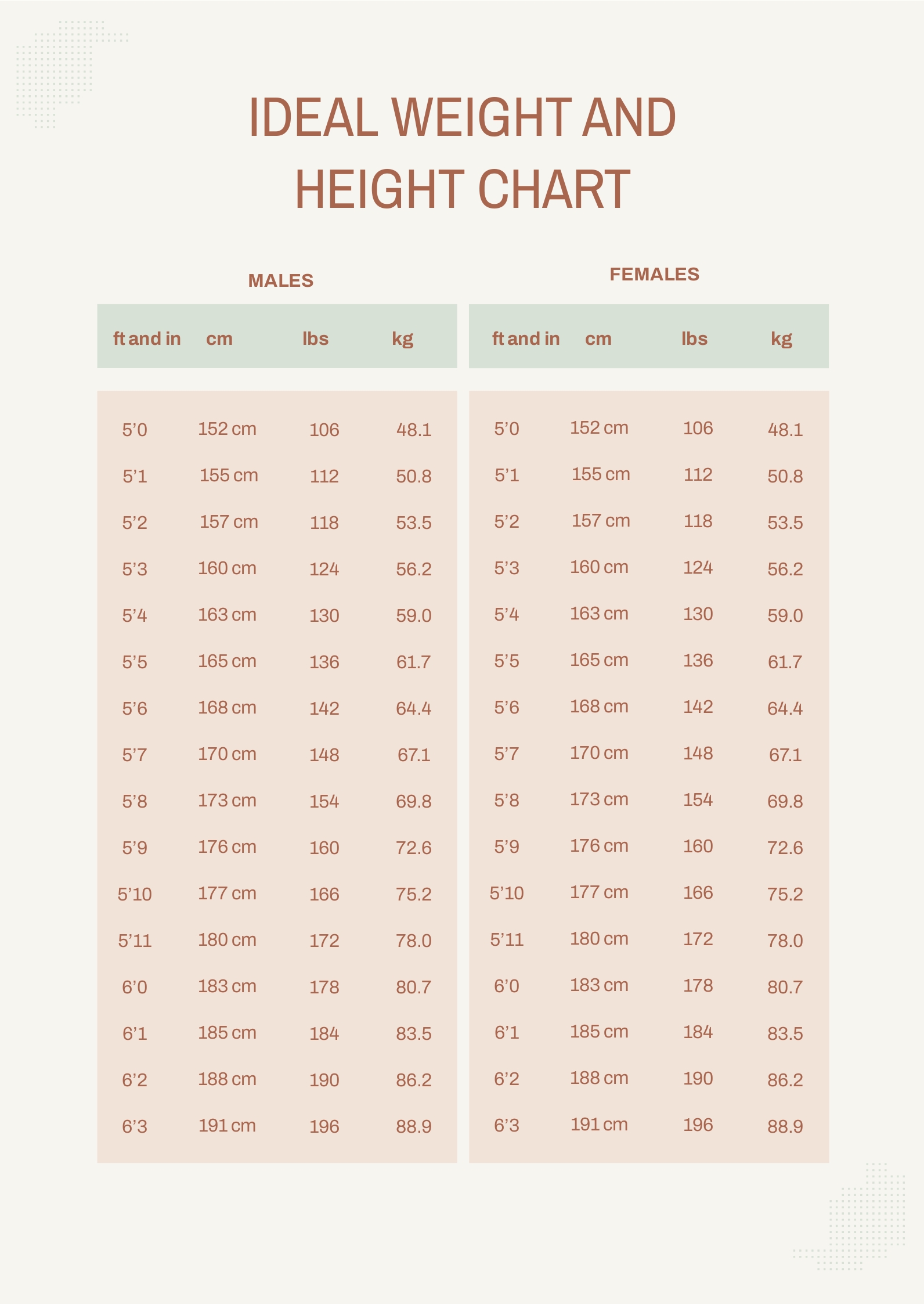
Digital charts, often available in PDF format, are convenient for quick access on your devices. You can fill them out directly on your computer or tablet, making it easy to keep track of updates without the need for physical storage.
- Pros:
- Easily editable.
- Accessible from anywhere.
- Can be shared with healthcare providers via email.
- Cons:
- Requires a device and possibly an internet connection.
- Some parents may prefer the tactile experience of writing by hand.
Printable Charts
Printable charts offer a traditional method of tracking your child’s growth. You can print one out, hang it on the fridge, or keep it in a dedicated folder. This approach can be particularly beneficial for younger children who may enjoy seeing their progress visually.
- Pros:
- More engaging for children.
- No need for electronic devices.
- Can be customized with stickers or drawings to mark milestones.
- Cons:
- Must be physically stored.
- Less convenient for quick updates.
Tips for Using the Chart Effectively
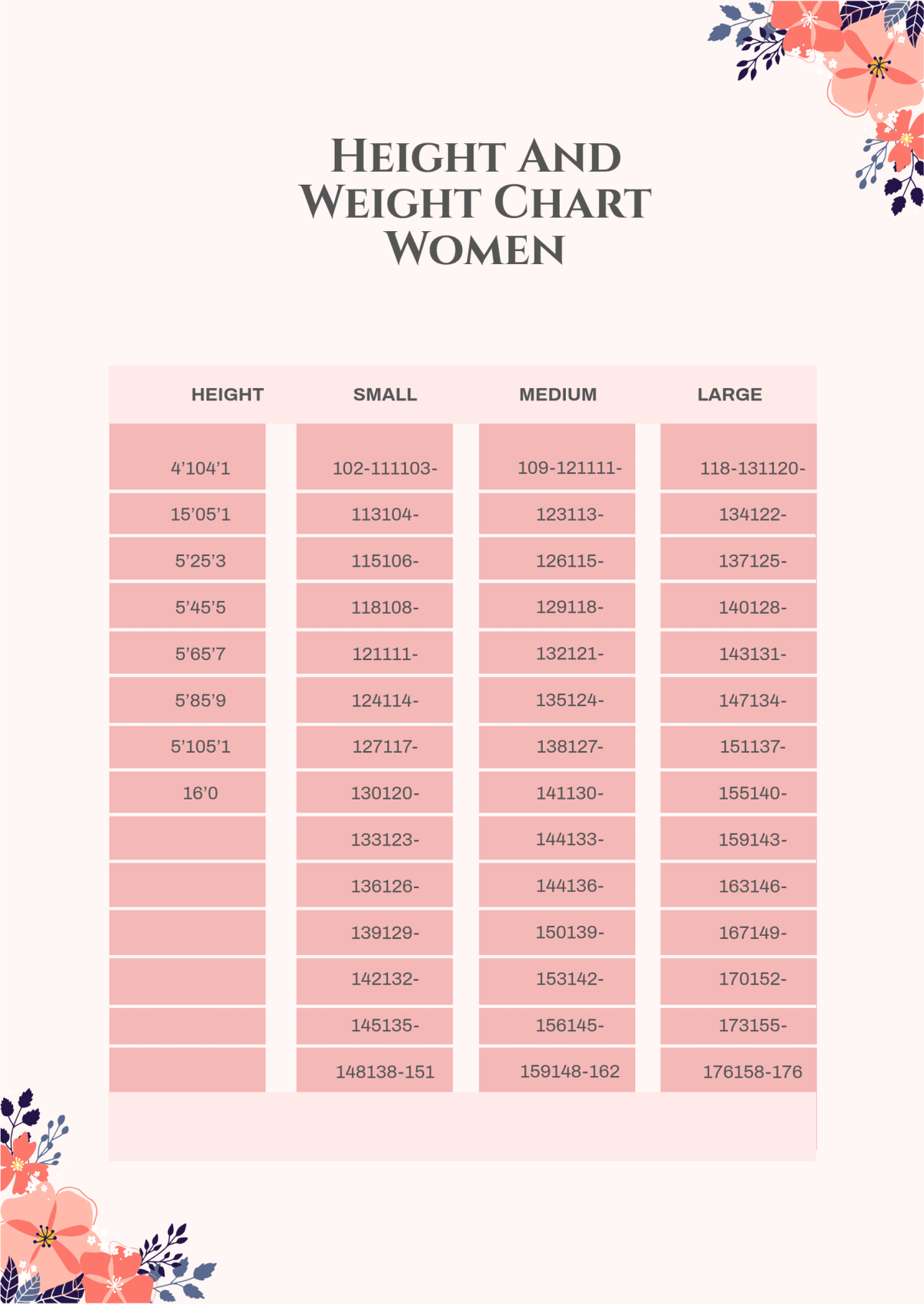
To maximize the benefits of using a Female Height And Weight Chart, consider the following tips:
- Regular Updates: Make it a routine to measure and record height and weight every few months. This consistency will give you a clearer picture of growth trends.
- Contextualize Measurements: Keep track of other factors, such as diet and physical activity levels. These can provide insight into any changes you observe in the chart.
- Consult Professionals: If you have concerns about your child’s growth based on the chart, don’t hesitate to consult with a pediatrician. They can offer tailored advice and recommendations.
By integrating a Female Height And Weight Chart into your parenting toolkit, you can keep an eye on your child’s growth and health, making it easier to ensure they are on a healthy path as they develop.
