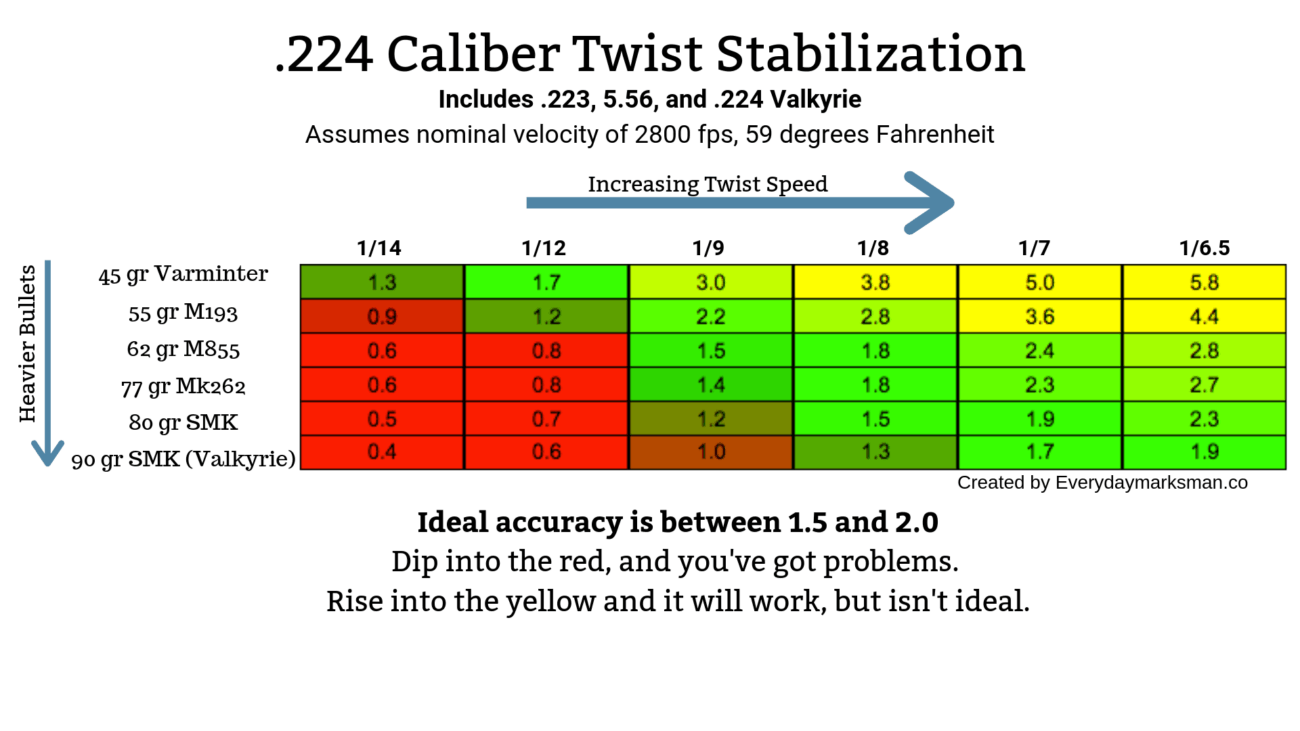
Understanding the relationship between bullet weight and twist rate can significantly enhance your shooting accuracy. The .223 Bullet Weight To Twist Rate Chart is a handy tool that helps you determine the ideal twist rate for specific bullet weights in the .223 caliber. This chart is essential for parents and gift-givers looking to support their shooting enthusiasts, whether they are beginners or seasoned shooters.
What Is Twist Rate and Why Does It Matter?
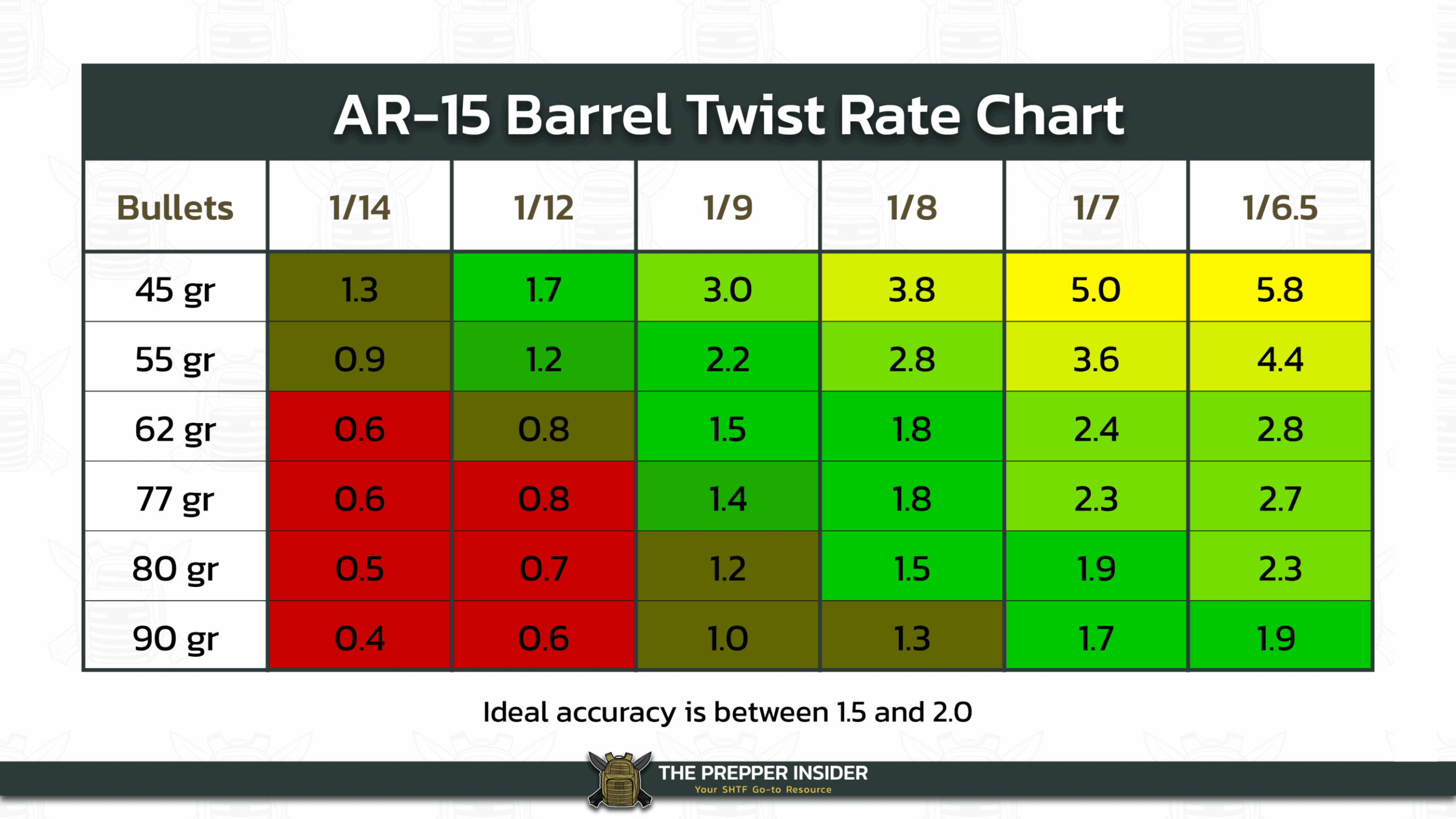
Twist rate refers to the number of inches a bullet travels down the barrel for one complete rotation. For instance, a 1:9 twist means the bullet makes one complete turn in 9 inches of barrel length. The twist rate is crucial because it stabilizes the bullet during flight. A properly stabilized bullet will fly straighter and hit its target more accurately.
When choosing ammunition, the twist rate must match the bullet weight. If the bullet is too heavy for the twist rate, it may not stabilize properly, leading to poor accuracy. Conversely, if the bullet is too light for the twist rate, it may be over-stabilized, which can also affect performance.
How to Read the .223 Bullet Weight To Twist Rate Chart
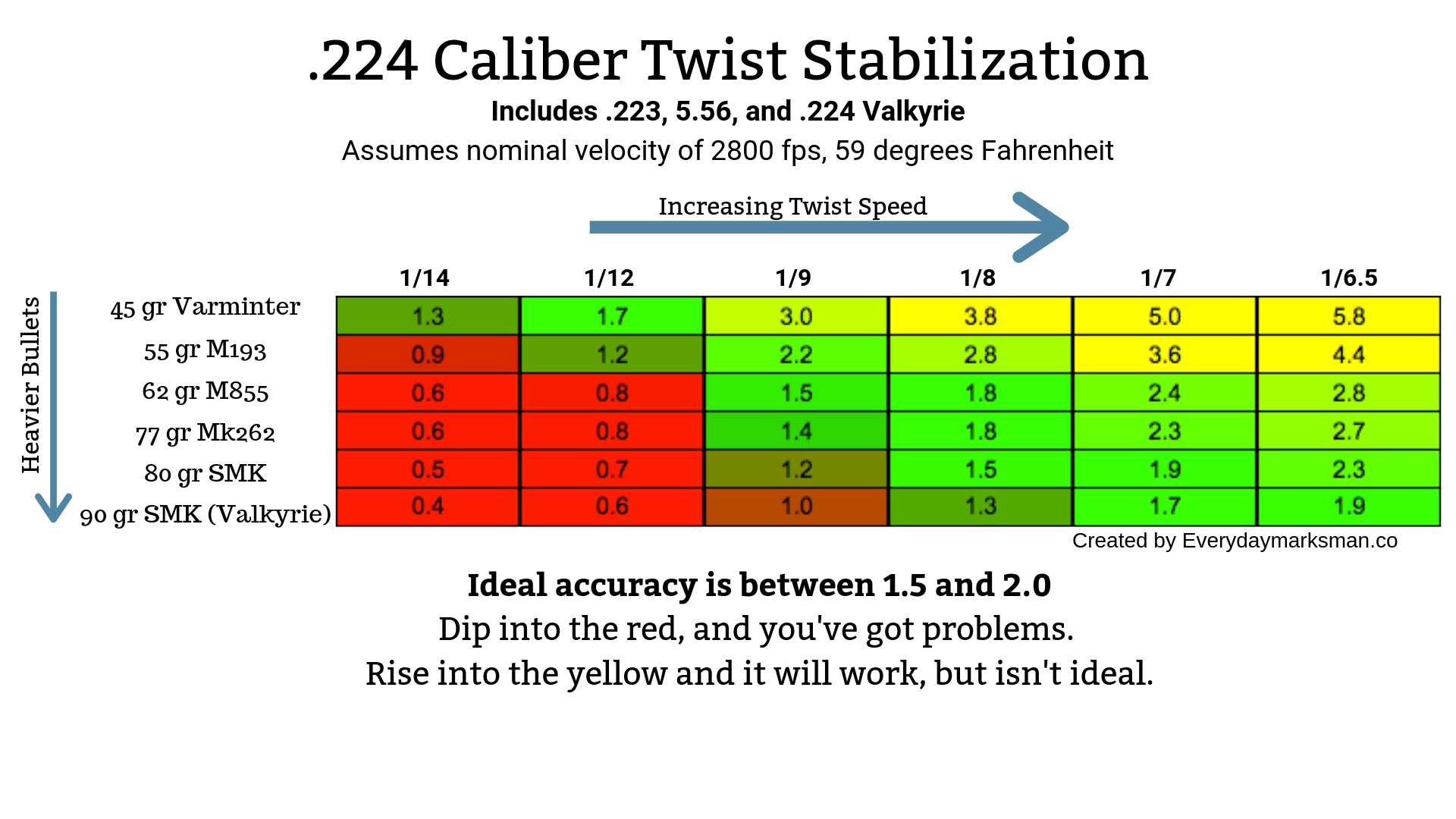
The .223 Bullet Weight To Twist Rate Chart is straightforward but requires careful interpretation. Here’s how to use it:
- Identify Bullet Weight: Look for the bullet weight you’re using, typically measured in grains (gr). Common weights for .223 bullets are 55 gr, 62 gr, 69 gr, and 77 gr.
- Find the Corresponding Twist Rate: The chart will list recommended twist rates to stabilize each bullet weight. For example, a 55 gr bullet may be stable with a 1:12 twist rate, while a 77 gr bullet might need a 1:7 twist rate.
- Consider Your Firearm: Not every firearm has the same twist rate. Check your firearm’s specifications to ensure compatibility with the recommended twist rates from the chart.
- Experiment: If you’re unsure, consider trying different combinations. Sometimes, personal preference plays a role in accuracy, so experimenting with various bullet weights and twist rates can yield the best results.
Common Mistakes When Using the Chart
While the .223 Bullet Weight To Twist Rate Chart is a reliable guide, mistakes can still occur. Here are a few common errors to avoid:
- Ignoring Manufacturer Specifications: Always check your firearm’s manufacturer recommendations. Some rifles may have unique twist rates that differ from the standard values listed in the chart.
- Overlooking Environmental Factors: Conditions such as wind, humidity, and altitude can affect bullet performance. Make sure to take these factors into account when testing your load.
- Neglecting Bullet Type: Different bullet types (e.g., hollow point, full metal jacket, etc.) can behave differently even at the same weight. Be aware that the material and design can influence stabilization and accuracy.
Practical Applications of the Chart
Using the .223 Bullet Weight To Twist Rate Chart isn’t just for competitive shooters; it has practical applications for various shooting scenarios:
- Hunting: Choosing the right bullet for hunting can mean the difference between a successful hunt and a missed shot. Knowing the ideal twist rate helps you select the right ammunition for your hunting rifle.
- Target Shooting: For target shooters, precision is key. Matching bullet weight with twist rate ensures better grouping on the target.
- Home Defense: If you’re using a .223 for home defense, understanding how your ammunition performs can be vital. The right bullet and twist rate can improve stopping power and accuracy.
Where to Find the .223 Bullet Weight To Twist Rate Chart
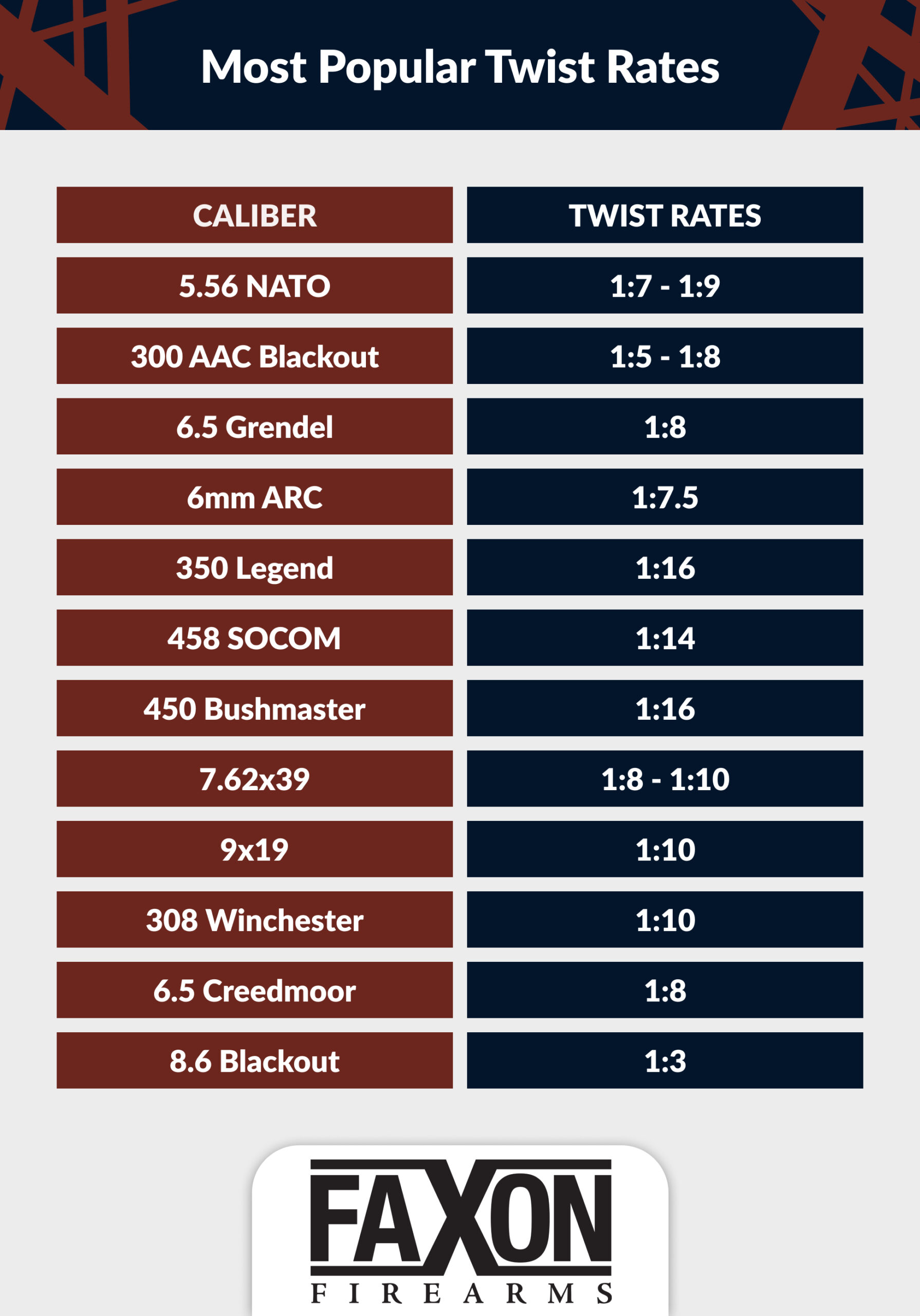
You can find the .223 Bullet Weight To Twist Rate Chart in various formats:
- Printable Versions: Many websites offer downloadable and printable charts. This is perfect for keeping a physical copy handy in your shooting kit.
- Mobile Apps: Some shooting apps include twist rate calculators that automatically provide the necessary information based on your inputs.
- Online Resources: Check reputable shooting forums, manufacturer websites, and shooting sports blogs for the latest charts and guides.
By having access to the .223 Bullet Weight To Twist Rate Chart, you can make informed decisions about your ammunition, leading to improved accuracy and performance. This resource is invaluable for anyone looking to enhance their shooting experience, making it a must-have in your toolkit.
For parents and gift-givers, this chart can also serve as an excellent starting point for choosing gifts related to shooting sports, ensuring that your loved ones have the right gear for their needs.
