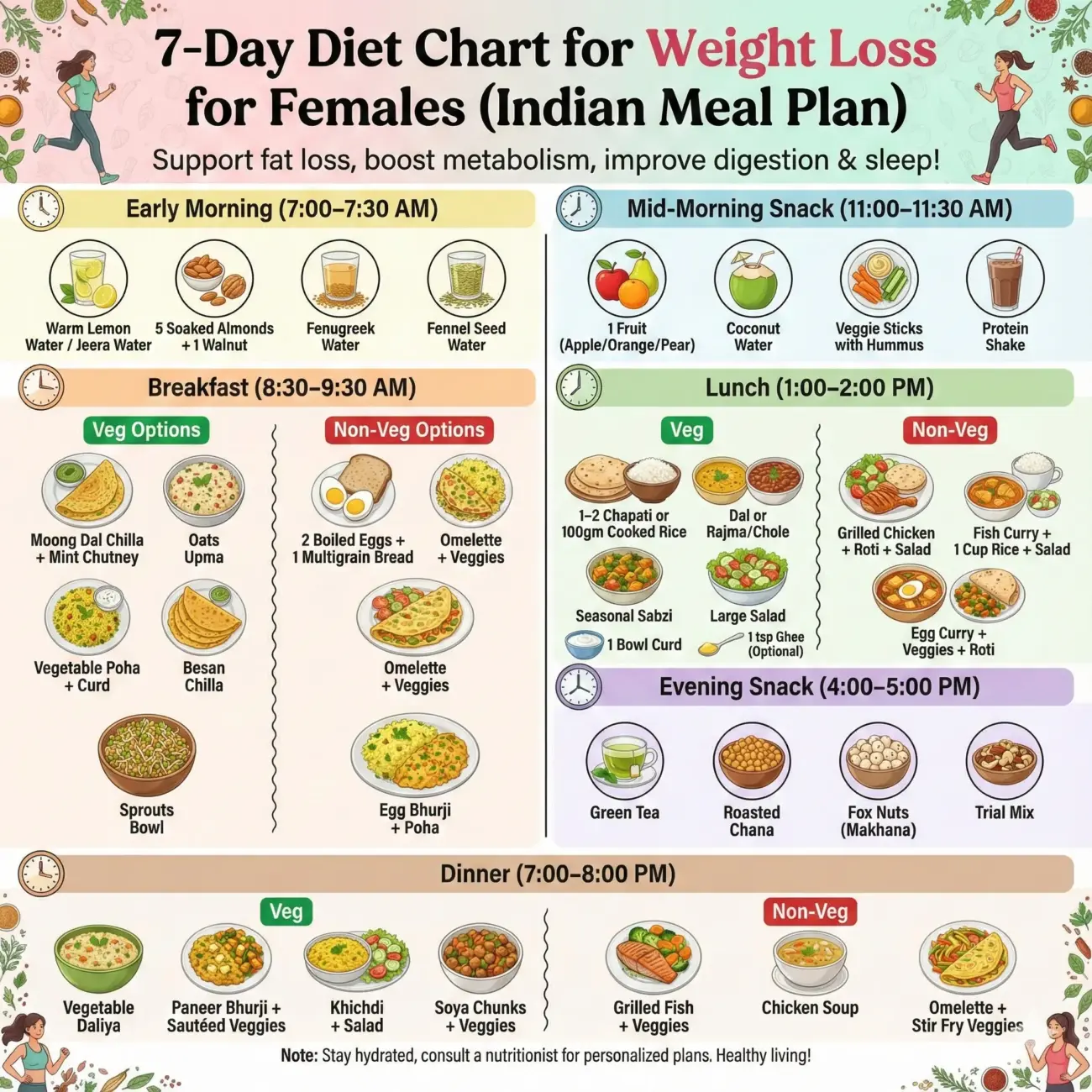
Creating a diet chart for weight loss for female needs to be practical, clear, and tailored to your specific goals. This chart can help you monitor your meals, manage calorie intake, and ultimately achieve your weight loss objectives. In this article, we’ll break down how to set up an effective diet chart, what to include, and how to use it to track your progress efficiently.
Understanding the Basics of a Diet Chart
A diet chart is essentially a structured meal plan that outlines what to eat throughout the day. For females aiming to lose weight, it’s crucial to incorporate balanced meals that provide adequate nutrition while keeping calorie intake in check. When designing your diet chart, consider the following:
- Caloric Needs: Assess your daily caloric needs based on your age, weight, height, and activity level. Online calculators can help you determine this.
- Nutritional Balance: Focus on a variety of foods, including proteins, carbohydrates, and healthy fats. This balance ensures you’re not only losing weight but also nourishing your body.
Key Components of Your Diet Chart
To create a useful diet chart for weight loss for female, include the following sections:
1. Meal Timing
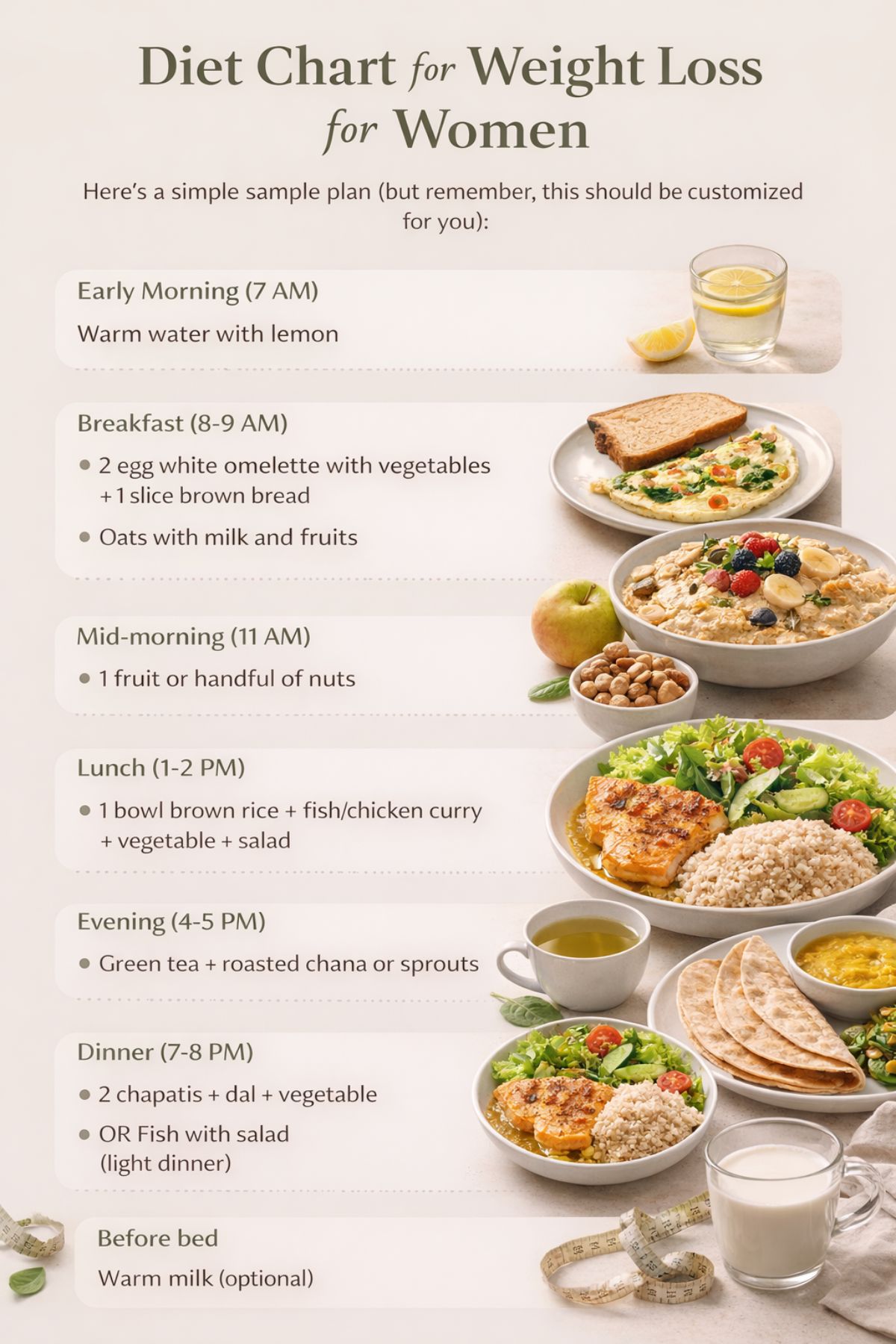
Organize your meals and snacks into specific time slots. For example:
- Breakfast: 7:00 AM
- Mid-Morning Snack: 10:00 AM
- Lunch: 1:00 PM
- Afternoon Snack: 4:00 PM
- Dinner: 7:00 PM
This structure helps establish a routine, making it easier to stick to your diet.
2. Food Choices
Next, list the foods you plan to include in each meal. A sample breakdown might look like this:
- Breakfast: Oatmeal with fruit or a smoothie
- Lunch: Grilled chicken salad or quinoa bowl
- Dinner: Baked fish with steamed vegetables
- Snacks: Nuts, yogurt, or fruit
Aim for whole, unprocessed foods as much as possible. They tend to be more filling and less calorie-dense.
3. Caloric Values
Include the estimated caloric values for each meal and snack. This helps you stay within your daily caloric limit. For example:
- Oatmeal with fruit: 300 calories
- Grilled chicken salad: 400 calories
- Baked fish with vegetables: 350 calories
Adding up these values will give you a clear picture of your total daily intake.
How to Fill Out Your Diet Chart
Now that you know what to include, here’s how to fill out your diet chart effectively:
- Plan Ahead: Dedicate time each week to plan your meals. This will help you avoid last-minute unhealthy choices.
- Use a Template: Download a printable diet chart template that suits your style. Look for options that allow space for notes, such as how you felt after each meal or any cravings you experienced.
- Be Flexible: While it’s important to stick to your plan, don’t be too hard on yourself if you deviate occasionally. Adjust your chart as needed to reflect changes in your routine or cravings.
Tracking Progress With Your Diet Chart
Using a diet chart is not just about planning your meals; it’s also about tracking your progress over time. Here’s how to effectively monitor your journey:
1. Weekly Check-Ins
Set aside time each week to review your diet chart. Assess what worked well and what didn’t. Did you stick to your meal plan? Were there days when you strayed? Reflecting on these questions will help you adjust your approach.
2. Record Your Weight
Consider noting your weight weekly in a separate section of your diet chart. This can help you see trends over time, rather than worrying about daily fluctuations.
3. Adjust as Necessary
If you find you’re not losing weight as expected, revisit your caloric intake and food choices. You might need to reduce portion sizes or include more physical activity in your routine.
