When tackling home improvement projects or DIY tasks, knowing the specifications of the materials you use is crucial. One such material is lag screws, specifically the 1 2 Galvinized Lag Screw Weight Chart. This chart provides essential information that helps you make informed decisions about your projects, If you are hanging heavy items or securing structures. Understanding the weight and load capacity of these screws can greatly enhance the safety and durability of your work.
Understanding Lag Screws
Lag screws, often referred to as lag bolts, are heavy-duty fasteners designed for wood-to-wood or wood-to-metal connections. They are thicker than standard screws and have a hexagonal head, which allows for greater torque during installation. The galvanized finish on these screws provides corrosion resistance, making them ideal for outdoor projects or areas with high humidity.
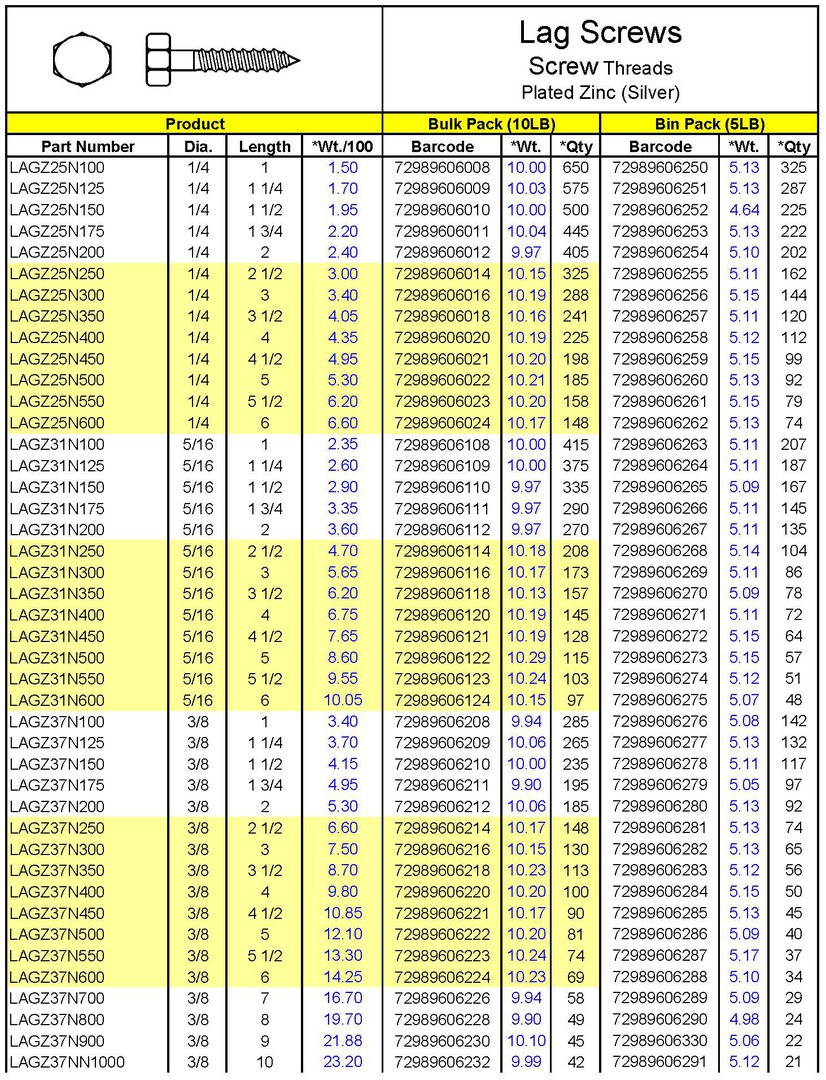
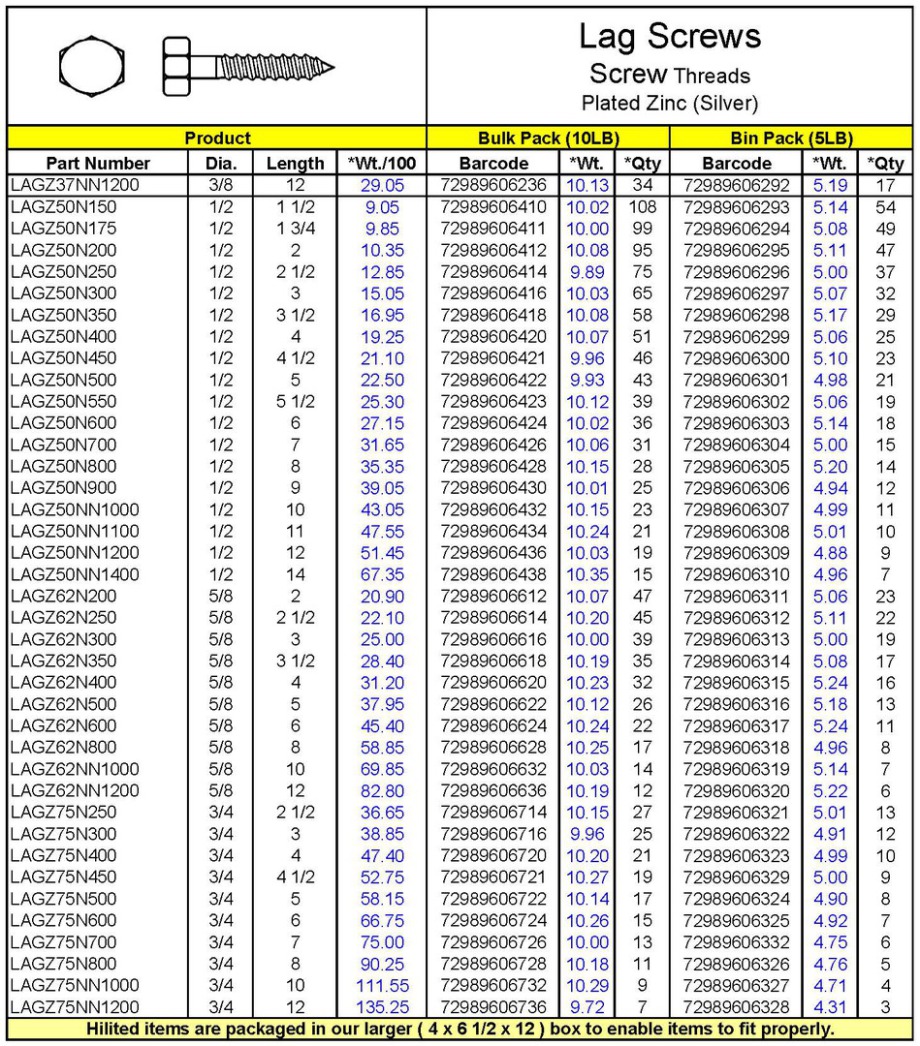
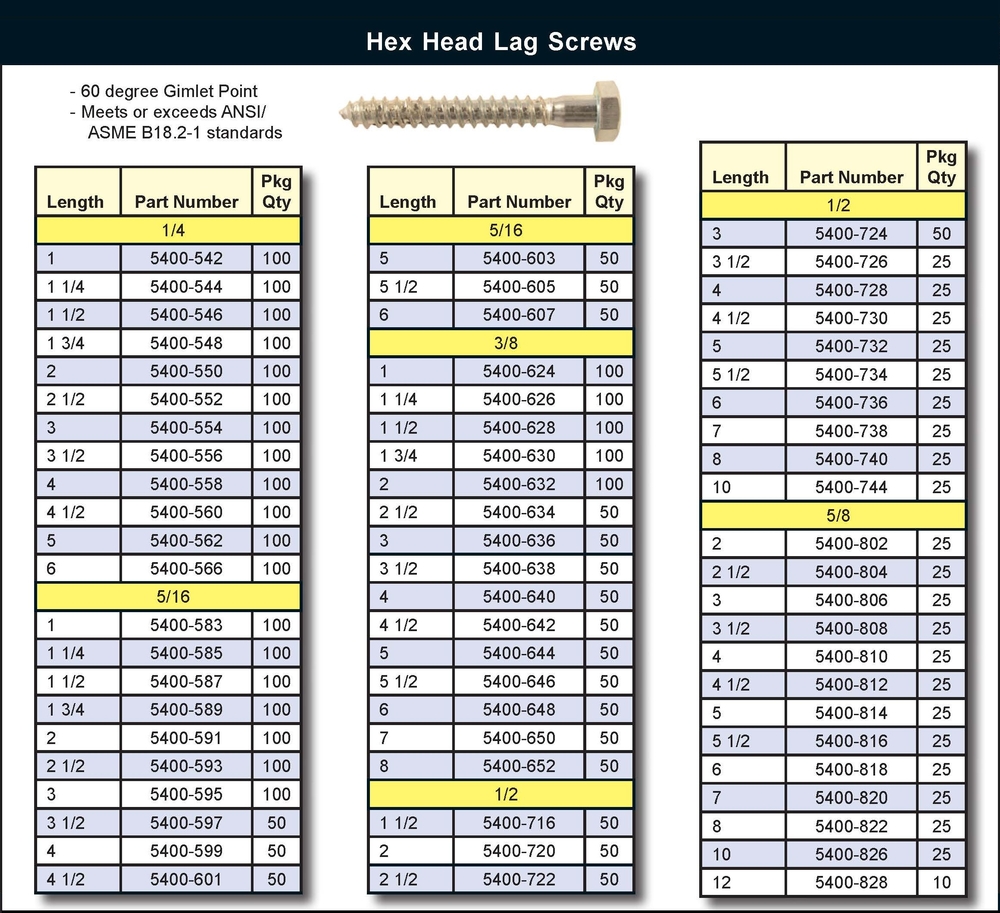
When you look at the 1 2 Galvinized Lag Screw Weight Chart, you’ll find that it includes critical details such as the screw’s length, diameter, and weight. These factors will help you determine the appropriate screw for your specific application. For example, heavier items will require longer and thicker screws for optimal support.
Key Information in the Weight Chart
The weight chart typically includes the following details:
- Diameter: This is often measured in inches and indicates the thickness of the screw.
- Length: The length of the screw can vary, usually ranging from 1 inch to several inches long.
- Weight: This is the weight of each screw, which helps you calculate the total weight for bulk purchases.
Here’s a simplified version of what you might find in a weight chart:
- 1/2 inch diameter, 4 inches long: Weight per screw (e.g., 0.2 lbs)
- 1/2 inch diameter, 6 inches long: Weight per screw (e.g., 0.3 lbs)
- 1/2 inch diameter, 8 inches long: Weight per screw (e.g., 0.4 lbs)
This format allows you to quickly assess which screws will be best suited for your projects.
How to Use the Weight Chart Effectively
To make the most of the 1 2 Galvinized Lag Screw Weight Chart, follow these steps:
- Assess Your Project Needs: Determine the weight of the items you plan to secure and the materials you’ll be working with. This will guide you in selecting the correct lag screw size.
- Calculate Total Weight: If you’re using multiple screws, multiply the weight of one screw by the number of screws you’ll need. This will help you gauge the overall load and ensure your structure can handle it.
- Consider Length and Diameter: Thicker and longer screws will generally support more weight. Ensure that the screws you select match the thickness of the materials being fastened.
- Check for Compatibility: Make sure that the lag screws are suitable for the materials you’re working with. For example, using lag screws in concrete may require different specifications than those used in wood.
- Keep Safety in Mind: Always overestimate your weight needs to ensure safety. It’s better to err on the side of caution when it comes to weight-bearing installations.
Common Applications for 1/2 Galvinized Lag Screws
These screws are incredibly versatile and can be used in various applications:
- Decking: When building or repairing decks, 1 2 Galvinized lag screws provide the strength needed to hold heavy load-bearing beams securely.
- Furniture Assembly: For outdoor furniture, these screws can withstand the elements while keeping your pieces sturdy.
- Structural Support: In construction, they’re often used to secure framing and other heavy components.
Understanding the specific requirements for each application will help you select the right screws from the chart.
